Monday, 31 August 2015
Key dates in Ukraine since Yanukovych ouster
 Ukraine has suffered 18 months of turmoil since pro-Russian president Viktor Yanukovych was ousted in a popular revolt last year, an event that set in train a separatist insurgency in the industrial east.
Here are key dates in a conflict that has triggered the worst standoff in East-West relations since the Cold War:
- Yanukovych ousted -
February 22, 2014: Kremlin-backed Yanukovych is ousted by parliament and flees to Russia after three months of pro-European demonstrations.
The security forces launched a crackdown on Kiev's Independence Square, or Maidan, on February 18. More than 100 were killed in three days.
The unrest was triggered by the government's decision to suspend talks on an association agreement with the European Union in favour of closer ties with Moscow.On May 25, pro-Western billionaire, Petro Poroshenko, is elected president.
- Crimea annexed -
February 27/28: Russian troops and pro-Moscow forces begin seizing ports and cities on Ukraine's Black Sea peninsula of Crimea.
March 16: Crimean residents, mostly Russian speakers, vote to join Russia in a referendum that Kiev and the West do not recognise. On March 20, Russia's parliament ratifies a treaty incorporating Crimea into Russia.
The "annexation", denounced by Kiev and the West sparks the worst diplomatic crisis between the West and Russia since the fall of the Soviet Union.
- Separatist rebellion in the east -
April 6: Pro-Moscow demonstrators seize government buildings in towns and cities in Ukraine's east, including Donetsk and Lugansk.
April 13: Kiev announces the launch of an "anti-terrorist" operation in the east to reclaim the areas controlled by the separatists.
May 11: Voters back independence in referendums in Lugansk and Donetsk, rejected as illegitimate by Kiev and the West.
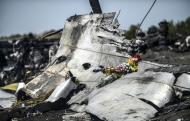
July 17: Malaysia Airlines flight MH17 is shot down, apparently by a missile, over rebel-held territory, killing 298 people. Kiev and the rebels blame each other.
July 29: The EU and the United States broaden sanctions on Russia, which later bans most US and EU food imports. The Western sanctions are extended by six months in June 2015.
Kiev and the West accuse Russia of backing the separatists by supplying them with arms, troops and military advisers, claims Moscow denies.
August 25: Rebels mount a counter-offensive in the southeast, reportedly backed by Russian troops and heavy weapons, and inflicting a series of defeats on Ukrainian troops.
More than 360 soldiers are killed in the eastern Ukrainian town of Ilovaysk in the space of a few days, says Kiev.
- The Minsk I and II accords -
September 5: Ceasefire signed in the Belarussian capital Minsk between Kiev and the rebels. In mid-October, new negotiations fail and violence resumes.
October 26: Pro-Western parties win big in a general election boycotted in the east. On November 2 separatists win leadership elections in the east that Kiev and the West refuse to recognise.February 12, 2015: The Ukraine government and rebels agree to a "Minsk II" peace roadmap, backed by the leaders of France, Germany and Russia.
The ceasefire deal strengthens the provisions of the Minsk I agreement and enlarging the buffer zone from which heavy weapons should be withdrawn. The fragile truce leads to a marked de-escalation but is punctuated on an almost daily basis by deadly incidents.
The fighting has left more than 6,800 dead since April, 2014.
- Clashes before parliament -
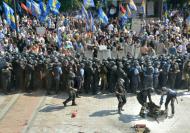
August 31: As lawmakers give initial backing to reforms granting more autonomy to pro-Russian separatists, fierce clashes erupt between police and nationalist demonstrators outside the Ukrainian parliament.
A member of the National Guard dies in the worst unrest in Kiev since Yanukovych was ousted, while around 100 people, mainly police, are wounded.
AFP
Migrant trains reach Germany as EU asylum system creaks
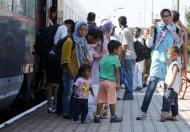 VIENNA/MUNICH (Reuters) - Trainloads of migrants arrived in Austria and Germany from Hungary on Monday as European Union asylum rules collapsed under the strain of a wave of migration unprecedented in the EU.
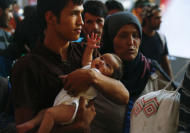
As thousands of men, women and children - many fleeing Syria's civil war - continued to arrive from the east, authorities let thousands of undocumented people travel on towards Germany, the favoured destination for many.
The influx is a crisis for the European Union, which has eliminated border controls between 26 "Schengen area" states but requires asylum seekers to apply in the first EU country they reach - something that is often ignored as migrants race from the fringes of the bloc to its more prosperous heart.
In line with EU rules, an Austrian police spokesman said only those who had not already requested asylum in Hungary would be allowed through - but the sheer pressure of numbers prevailed, and trains were allowed to move on.VIENNA/MUNICH (Reuters) - Trainloads of migrants arrived in Austria and Germany from Hungary on Monday as European Union asylum rules collapsed under the strain of a wave of migration unprecedented in the EU.
As thousands of men, women and children - many fleeing Syria's civil war - continued to arrive from the east, authorities let thousands of undocumented people travel on towards Germany, the favoured destination for many.
The influx is a crisis for the European Union, which has eliminated border controls between 26 "Schengen area" states but requires asylum seekers to apply in the first EU country they reach - something that is often ignored as migrants race from the fringes of the bloc to its more prosperous heart.
In line with EU rules, an Austrian police spokesman said only those who had not already requested asylum in Hungary would be allowed through - but the sheer pressure of numbers prevailed, and trains were allowed to move on.But it is far from certain her view will prevail when EU ministers hold a crisis meeting on Sept. 14. Britain, which is outside the Schengen zone, says the border-free system is part of the problem, and a bloc of central European countries plans to oppose any binding quotas.
Refugees who managed to board the trains heading west on Monday mixed with well-heeled business travellers and tourists, some of whom were angry over the delays to their journey.
"I have a plane to catch from Vienna Airport. I took the train because of the road checks and the traffic jam ... and now this? Are you kidding me?” said Orsolya Jakab, 35, a Hungarian accountant.
Outside Vienna station, thousands of supporters of the migrants chanted: "Refugees are welcome here".
"These people need help, they have come from a horrendous situation, we should not think twice about helping them," said Ottwin Schober, a retiree from Vienna who had been moved by the discovery of a truckload of 71 dead migrants in Austria last week.
"WE ESCAPED DEATH"Austrian authorities have stopped hundreds of refugees and arrested five traffickers along the highway from Hungary where the abandoned truck was found near the Hungarian border.
Interior Ministry official Konrad Kogler denied the clampdown, which includes increased checks on the eastern borders, violated the Schengen accord on free movement.
"These are not border controls," said Kogler. "It is about ensuring that people are safe, that they are not dying, on the one hand, and about traffic security, on the other."
At Munich, in southern Germany, police said around 400 migrants had arrived on a train from Hungary via Austria.
“There are advanced reports that at least one or two further trains ... are coming which could have a total of three, four or five hundred refugees on board," police official Juergen Vanselow, told Reuters TV.
At Munich station in southern Germany, two trains arrived from Hungary carrying several hundred mostly Syrian refugees.
Men, women and children smiled with relief on reaching German soil, and police shepherded them mostly Syrian refugees.
Men, women and children smiled with relief on reaching German soil, and police shepherded them from the platform to a station outbuilding to be registered. They were then taken to waiting buses outside, to be transferred to a reception centre in a former barracks in the north of the city.
Eighteen-year-old Syrian Mohammad al-Azaawi said he had abandoned his engineering degree and fled the country after being wounded by a car bomb. He showed reporters scars on his stomach.
His brother Ahmed said they had paid up to 3,000 euros ($3,365) to make their way via Turkey, Greece, Madedonia, Serbia, Hungary and Austria. The family had had to sell their house to raise the money.
"We escaped death in Syria. We want to stay here for a better future," he said.
REUTERS
Dozens of Venezuelans shot by police amid crime crackdown
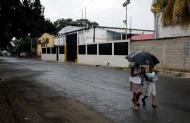 MARACAY, Venezuela (AP) — Workers in the industrial complex had been hiding in bathrooms and closets for hours when the shooting stopped. The last of the four suspected thieves, a slightly built man in yellow rain boots, surrendered on the roof, crying out, "Jesus saves!"
Police put him into a truck and drove away. But then witnesses watched, confused, as the truck circled back.
A video secretly recorded that rainy day in early August showed police officers taking the man to a concrete alley in the complex where his three companions already lay dead. They held him in place, and then shot him point blank. The video does not show the deaths of the others, but two witnesses told The Associated Press they saw the trio lined up against a wall earlier in the morning, police pointing guns at their chests.
The slayings raised concerns about a recent crime-fighting initiative that aims to take back neighborhoods overrun by gangs. The program, officially rolled out in July as Operation Liberate the People, already has seen police shoot and kill more than 80 suspected criminals, according to an AP tally based on officials' statements to the media. There have been no reports of police injuries or deaths during the crackdown.
Human rights groups accuse security forces of carrying out summary executions. But many here also say the government is right to take a more militarized approach to fighting crime. Venezuelans broadly support iron-fist policing. And it's the poor— those more likely to be caught in the crossfire— who most want to see greater use of force, according to national polls.
In the case of the four killings, officials initially said the men died during a shootout after they were caught stealing from a metalworking shop in the city of Maracay, outside Caracas. But after the video was leaked to the Miami-based Spanish-language newspaper El Nuevo Herald, eight officers were arrested and charged with homicide. The AP has not independently verified the authenticity of the video, but witnesses corroborated what it shows, and officials acted immediately after its release, apparently in reaction to what it revealed.
"The police and the thugs are one and the same here," said Willy Contreras, a young man who works beside the courtyard where the men were killed. "Neither side cares about human rights. And we can't, either. Killing the criminals is the only way to make sure they won't just go free."
President Nicolas Maduro has not spoken about the issue. National Assembly speaker Diosdado Cabello addressed concerns about police killings generally in July, saying opposition groups were trying to score points by undermining what he said was an effective approach.State officials overseeing the crime-fighting initiative did not respond to calls and emails seeking comment
Venezuela has the world's second-highest murder rate, after Honduras, according to the United Nations. Virtually everyone here has been touched by violence, and a culture of impunity means most killings go unsolved. While police generally acknowledge when they kill someone, it is not always clear that the slaying was committed in self-defense.
The government stopped publishing data on police-related slayings in 2008, but the local nonprofit Committee of the Families of Victims counted 1,018 cases of extrajudicial killings in 2014, a 25 percent increase from 2013. That's more than twice the number of people who were reported killed by police last year in the United States, which has 10 times the population of Venezuela.
The U.N. Committee Against Torture has called on the country to investigate an emerging pattern of extrajudicial killings. On Monday, two international human rights groups, Human Rights Watch and Freedom House, expressed concern about the number of fatal shootings during this summer's pacification operations.
"We understand the national concern about unstoppable violence in Venezuela, but this is not the way to fight crime," Freedom House Latin America director Carlos Ponce said. "It's really worrying when you see that the law isn't being applied. You don't know how many civilians are going to be killed."
The neighborhood of warehouses and low-slung cinderblock homes where the four men died was the site of the summer's first mass pacification campaign, one of dozens of similar operations taking place around the country as the government reasserts its authority after years of a more passive approach to law enforcement. In May, about 2,000 law enforcement officers stormed in to reclaim an abandoned police station, killing 10 people over two days, according to local news reports.
A similar operation in Caracas in July resulted in 14 deaths and hundreds of arrests.
Analysts say the anti-crime initiative appears to be a bid to drum up support ahead of December elections, which the opposition could sweep for the first time in more than a decade. But police killings already were on the rise, according to Central University of Venezuela criminology professor Andres Antillano. He said police have killed 20 people during the past year and a half in the Caracas slum he studies.
Venezuelan police increasingly are under attack themselves, with an average of one officer killed every day, often for their weapons. Earlier this year, a security camera captured a teenager shooting a state police supervisor from behind as the officer ordered breakfast at a bakery in a small town near Caracas, then stealing his gun. The 18-year-old later was caught and killed by police.
Venezuelan police say they are scared to leave their stations. Last spring, they held a street march demanding better protection and harsher punishment for criminals.Marion Conoropo, the cousin of one of the officers charged in the Aug. 5 killings, and a former Maracay police officer herself, said the agency is underpaid and under-protected, and officers are pushed to show results.
"You have to understand: He was under so much pressure," she said of her cousin Humberto Conoropo. "The only thing people understand here is force."
The same day the Maracay video was leaked, men with automatic weapons attacked the police station near the site of the slayings, killing one officer and injuring two others in what many locals believe was an act of retaliation.
The whitewashed walls of the station still are stippled with bullet marks, and the carcass of a police truck, its windows punched out by the shooting, blocks the building's entrance.
Workers at the industrial complex were reluctant to condemn the killings of the four suspected thieves even as they scrubbed down bloodied cement and painted over the chest-level craters left by the bullets. They said thieves have targeted them for years, despite electric fences, surveillance cameras, and weekly protection payments to both gangs and law enforcement.
Andres De La Cruz, who says he saw police pointing guns at three of the men and heard the fourth's pleas for mercy, said he's still trying to forget that nightmarish morning. But he's glad there have been no robberies since.
AP
Murder charge filed against Oklahoma politician's son
 OKLAHOMA CITY (AP) — Prosecutors filed a first-degree murder charge Monday against a man in the fatal stabbing of his father, Oklahoma Labor Commissioner Mark Costello, during an attack at a fast-food restaurant.
Police have said Christian Costello, 26, pulled out a knife while he and his 59-year-old father talked Aug. 23 at a Braum's restaurant and ice cream shop in Oklahoma City. Witnesses said the attack continued after Mark Costello ran into the parking lot where his wife, Cathy Costello, tried to intervene and stop the assault.
"Homicide detectives were summoned to the scene, and interviewed at least 17 witnesses, all of whom stated they observed the defendant stabbing the victim with a small knife," police inspector Lyndell Easley wrote in an affidavit attached to the charge.
At least one witness knocked Christian Costello off balance with a vehicle, and others held him down until officers arrived, police have said.
The state medical examiner's office ruled last week that Mark Costello died from stab wounds to the neck and classified his death as a homicide.
Christian Costello is being held without bond in the Oklahoma County jail, and court records do not indicate if he has been assigned an attorney.
Ed Blau, Christian Costello's attorney of record on a pending misdemeanor charge of "outraging public decency," said he expects a public defender will be assigned to represent Costello on the murder charge. That earlier charge came after, authorities say, Costello was found standing outside an Oklahoma City elementary school with his pajama pants down.
"I'll withdraw from his misdemeanor case, because obviously the first-degree murder case will take precedence," Blau said. "The misdemeanor case will be an afterthought."
Court records show Christian Costello at one point spent 90 days in a mental health facility and took mood stabilizers. His family said in a statement that he suffers from a mental illness, although they did not specify which one.
A Bartlesville native and the founder of a telephone software company, Mark Costello was apparently considering running for lieutenant governor in 2018.
A funeral mass for Costello was held Saturday at the St. Monica Catholic Church in Edmond.
___AP
California doctor faces murder trial in 3 men's drug deaths
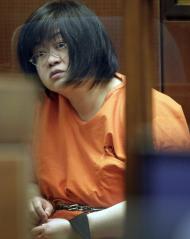 LOS ANGELES (AP) — Even after several patients died of overdoses, the California doctor now charged with murder in their deaths continued to pass out prescriptions for powerful painkillers in appointments that lasted as little as three minutes, often without conducting physical exams, a prosecutor told jurors Monday.
John Niederman, a deputy Los Angeles district attorney, said a coroner notified Dr. Hsiu-Ying "Lisa" Tseng of her first patient overdose death in September 2007, just two days after she gave him prescriptions for oxycodone, Xanax, and Soma.
The next patient died six months later. Jurors were shown a picture of his body, lying face-down in his bed.
One patient even overdosed inside Tseng's clinic, Niederman said.
"The defendant was repeatedly notified by law enforcement that her patients were dying on her," Niederman told jurors in the opening statements of her trial. "The evidence will show that during this period of time, the defendant's practice of prescribing did not change at all."Niederman told jurors they should find Tseng guilty of second-degree murder in the deaths of three patients. He said 12 of Tseng's patients died in all, but only three led to murder charges because other factors were involved in the rest of the deaths.
Tseng has pleaded not guilty.
Tseng's attorney, Tracy Green, told The Associated Press in a statement that it's "tragic whenever any patient has drug addiction or mental health issues and dies of a drug overdose."
"However, the overdose deaths in this case were simply not Dr. Lisa's fault," she said. "She was just one of the links in a long sad chain. We trust the American trial process to show that Dr. Lisa is not guilty of these criminal charges."
Tseng, 45, is among only a handful of doctors nationwide to be charged with murder related to prescription drugs.
She operated a storefront medical clinic with her husband in the Los Angeles suburb of Rowland Heights.
The Drug Enforcement Administration says Tseng wrote more than 27,000 prescriptions over a three-year period starting in January 2007 — an average of 25 a day.
The three murder charges against Tseng stem from the deaths of three of her young male patients in 2009, including 21-year-old Joey Rovero, a senior at Arizona State University who grew up in the San Francisco Bay suburb of San Ramon.
Rovero's mother, April Rovero, attended jury selection and opening statements, and plans to attend the majority of the trial, which is expected to last weeks.
"My son was a victim that needs to be represented," April Rovero told The Associated Press. "When this happens to a child or a sibling, my experience is it changes your life irrevocably, forever. It's not something you get over."
She said her son never had any problems with addiction and was so aware of the dangers of alcohol that instead of driving, he once walked 2 miles home in the middle of the night after drinking some beers with his buddies.
A toxicology report found that Joey Rovero had low levels of alcohol, Xanax and OxyContin in his bloodstream, said his mother, who lives in San Ramon and founded the National Coalition Against Prescription Drug Abuse after her son's death.Joey Rovero died nine days after he and friends from Arizona State drove to the Los Angeles area and got prescriptions for dozens of pills from Tseng, according to court records.
AP
Video of Israeli soldier arresting boy becomes latest in war of perception
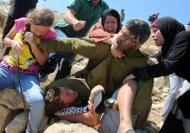
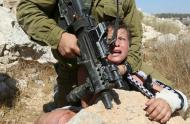 A soldier pins a boy down and is assaulted by his family: The scene might have gone unnoticed if not for footage that has turned it into another weapon in the Israel-Palestinian war of perception.
Palestinians see it as proof of Israel's abuses in the occupied West Bank, while many Israelis say the soldier fell into a media trap laid by activists.
The incident played out on Friday in the Palestinian village of Nabi Saleh and footage of it has since gone viral, generating a bitter debate both online and off.
As is often the case when it comes to the conflict between Israelis and Palestinians, there has been little room for middle ground.
The video and pictures, including those taken by AFP, show a masked Israeli soldier trying to arrest an 11-year-old boy who has a cast on his left arm.
According to the Israeli military, the boy was suspected of having thrown stones during a protest.As the soldier holds him against a rock, his automatic rifle at his side, members of the boy's family, including his mother and sister, along with other activists rush over and try to pull him off the child.
A wrestling match ensues, with the soldier's ski mask pulled off and the boy's sister biting the soldier on the hand. The soldier yells for help, and eventually a superior officer arrives and orders him to let the boy go.
While walking away, visibly frustrated, the soldier throws down a stun grenade.
The images quickly made the rounds.
Palestinian papers reproduced a cartoon showing the soldier with a dog's head, while some in Israel saw the decision not to arrest the boy as a sign of weakness.
Left-leaning Israeli newspaper Haaretz, referring to the headlock the soldier had put the boy in, lamented the situation in which the military has found itself in the West Bank.
"It's a national headlock in which an entire army, and behind it a nation, remains in a state of denial that there are military solutions to the conflict," it said.
- 'I wasn't afraid' -
Nabi Saleh, near Ramallah, has for years been a flashpoint in the Israeli-Palestinian conflict.Each Friday, Palestinians, foreigners and even Israelis protest against the expansion of the nearby Halamish settlement. Stones are typically thrown by the protesters, while tear gas and rubber bullets are fired by the security forces.
In the past three years, two people have died and 375 been injured, with nearly half of them minors, according to protesters.
According to his father, the child in the video, Mohammed Tamimi, broke his wrist while fleeing an Israeli tank in his village, which was why he was wearing a cast.
"I wasn't afraid," the boy told AFP, "but I cried to call my family to come get me away from the soldier."
His mother Nariman said she thought "only one thing: free my son from the soldier's hands."
The Tamimi family has been at the forefront of the protests in Nabi Saleh. The father, Bassem, said he has been arrested nine times.
Ahed, the boy's teenage sister wearing a Tweety Bird shirt in the video, is known to some for older photos showing her raising her fist at Israeli soldiers. It resulted in her being received by then Turkish prime minister Recep Tayyip Erdogan in 2012.
Some Israelis have accused the family of being agitators who put their children in danger.
An Israeli officer familiar with the situation called Friday's protest a "PR stunt" where demonstrators "try to provoke soldiers by hurling stones at them that can be deadly", forcing them to react.
Arnon, the soldier's father, told Israeli journalists that he regrett that his son's restraint was not being given more praise.
The Haaretz analysis however sought to put the episode into context.
"No amount of PR and media management will make the occupation of another nation look good," it said.
AFP
Kansas man sentenced to 20 years for airport bomb plot
 WICHITA, Kan. (AP) — A Kansas man who plotted a suicide bomb attack aimed at causing "maximum carnage" at a Wichita airport was sentenced Monday to 20 years in prison
Terry L. Loewen apologized to his family and thanked his attorneys before U.S. District Judge Monti Belot imposed the proposed sentence that came with the plea deal. Loewen stared straight ahead and showed no emotion as the judge pronounced the expected sentence.
The 60-year-old Wichita man pleaded guilty in June to attempting to use a weapon of mass destruction. His arrest in December 2013 was the culmination of a months-long sting operation in which two FBI agents posed as co-conspirators.
"Here in the heartland, terrorism will never shake our faith in the things this country stands for — freedom, fairness and opportunity," U.S. Attorney Barry Grissom said afterward in a news release. "We won't give way to those who would inflict violence on their fellow citizens."
Loewen made a brief courtroom statement in which he apologized to his wife and his two sons and his extended family.
"I love you all and I realize the pain and suffering I caused you is enormous ... I do not ask for forgiveness because I deserve none," he said.
Prosecutors told the court that the proposed sentence in the plea agreement was much lower than other national security cases, but that the government believed it was appropriate given Loewen's age and health conditions.
His attorney, Tim Henry, asked Belot to recommend Loewen be incarcerated in a federal prison as close to his family as possible, adding he has been a "model inmate" in jail and does not need to be in a maximum security prison.
Loewen came to the attention of the FBI in late May 2013, when he became a Facebook friend of an individual who regularly posted information supporting violent jihad, or holy war, court documents show. Authorities said agents became concerned after looking back through Loewen's own Facebook activities. An online undercover agent contacted him, and offered to introduce him to someone who could help him engage in jihad.
At the time, Loewen was an avionics technician for Hawker Beechcraft's facility at Mid-Continent Airport, now called the Dwight D. Eisenhower National Airport. He was arrested on Dec. 13, 2013, as he tried to use his employee badge on a card reader to bring the fake bomb onto the tarmac.
"Terry Loewen abused his privileged airport access to attempt to perpetrate a terrorist attack in Wichita, Assistant Attorney General for National Security John Carlin said in the news release. "The National Security Division's highest priority is protecting the United States against terrorist threats — both international and domestic."Loewen's case is among at least 462 terror crimes associated with groups such as al-Qaida and the Islamic State that the U.S. government has prosecuted since the Sept. 11 terrorist attacks, according to the Center on National Security at Fordham Law School, a nonpartisan research and educational institute dedicated to security issues.
AP
Subscribe to:
Posts
(
Atom
)